Several incomplete spoon sets can hide the fact that the one size you use most is missing.
Lay out the actual sizes
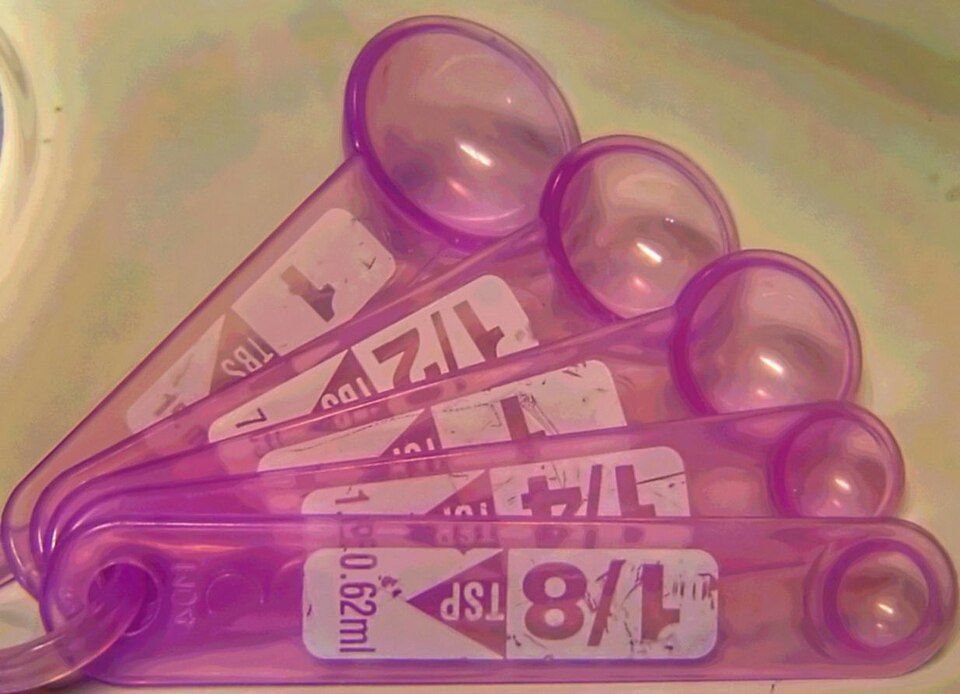
Arrange clean measuring spoons by their marked capacities. Read the markings rather than judging by the bowl shape. Group duplicate sizes together and keep different measurement systems identifiable so similarly named measures are not casually treated as interchangeable.
Build a usable everyday set
Select the sizes your usual recipes require and place them where they are easy to retrieve. Keep any specialty measures separately labeled. If a needed size is missing, use an appropriate verified conversion or obtain the suitable measure instead of guessing from an ordinary eating spoon.
Give duplicates a purpose
Keep a duplicate only if it helps with real cooking tasks, such as measuring different ingredients without interruption. Store extras away from the main set if they obscure the useful tools. Recheck the set after lending tools or reorganizing the drawer so the visible arrangement still represents working equipment.
What would you change first to count measuring spoons by the sizes you need?
This practical article was drafted with AI assistance for Little Days. It is not a submitted reader story or a claim of firsthand experience. The image is illustrative; its source is listed in Photo credits.