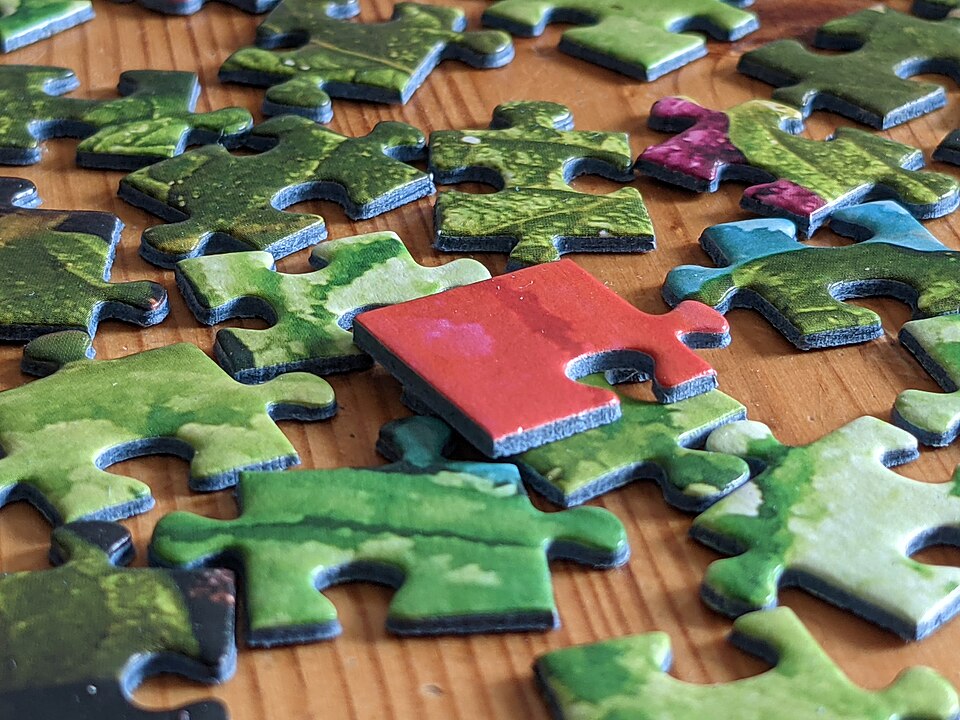
A partially finished puzzle can share a table more easily when loose sections rest on removable sheets. The pieces stay grouped without pretending the project is finished.
Match the working surface
Use stiff, flat sheets that fit within the table area and slide easily onto a nearby shelf. Keep the main assembled section on a suitable puzzle board if available. Test the sheets with a few pieces first.
Group by visible features
Place edge pieces on one sheet and a distinctive color or image area on another. Add a small handwritten label when two groups look similar. Move sheets carefully with both hands to keep pieces from sliding.
Leave a restart clue
Write which area you were building before putting the sheets away. Keep the reference image with them. Avoid stacking loose pieces directly onto assembled sections; separating the layers prevents the next session from beginning with repairs.
What would you change to make puzzle sections separated on removable sheets work in your home?
This practical article was drafted with AI assistance for Little Days. It is not a submitted reader story or a claim of firsthand experience. The image is illustrative; its source is listed in Photo credits.